As world leaders gather in Antalya, Türkiye, for the 31st UN Climate Change Conference (COP31), taking place from 9–20 November 2026, women from the Democratic Republic of Congo (DRC), the Republic of Congo and Cameroon are raising an urgent message: there can be no climate justice without defending the Congo Basin, protecting community territories and recognising the leadership of women on the frontlines of environmental struggles.
The Congo Basin is one of the world’s most important ecological treasures, acting as the “second lungs of the Earth”, after the Amazon, which is being decimated. Spanning over four million square kilometres across six countries, its forests, rivers and peatlands play a vital role in regulating the global climate, protecting biodiversity and sustaining millions of people. For Indigenous Peoples and local communities, the forest is not simply a natural resource; it is their home, heritage, identity and source of life.
Yet this vital ecosystem faces growing threats from mining, logging, oil and gas extraction, deforestation and expanding infrastructure. Across the Congo Basin, rising demand for minerals is increasing pressure on forests and community territories.
Recent investigations have documented mining concessions overlapping with community forests in the DRC, gold-mining-related forest destruction and water pollution in the Republic of Congo, and concerns over the impacts of the Lobé-Kribi iron-ore project on forests and livelihoods in Cameroon.
This exposes a growing contradiction: while governments promote renewable energy as a solution to the climate crisis, the extraction of minerals needed for the energy transition can create new threats to forests, water resources and the communities that depend on them.
For women in the Congo Basin, this is not an abstract debate. It means polluted rivers, disappearing food sources, loss of agricultural land and declining access to forests.
Women on the frontlines expose the cost of extractivism
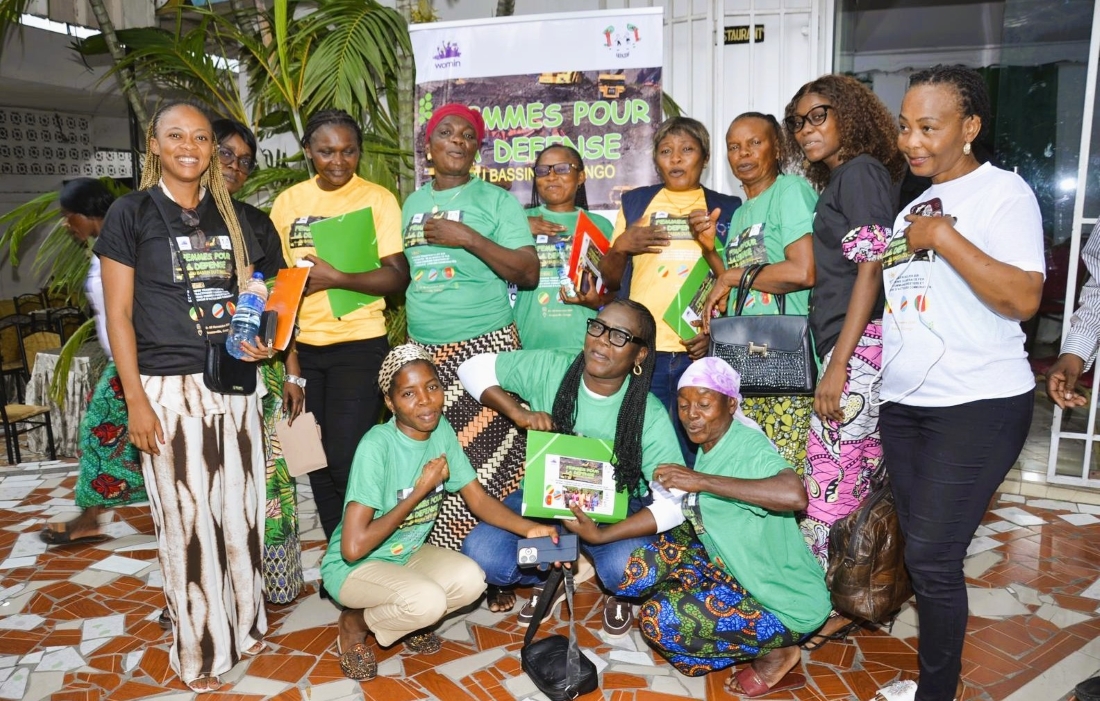
To strengthen collective resistance, women and community organisations from the DRC, the Republic of Congo and Cameroon came together for a cross-border solidarity exchange to share stories of resistance, expose the impacts of extractivism and develop strategies to defend the Congo Basin.
Over three days, organisations including Centre d’Encadrement pour la Promotion de la Femme et la jeune fille (CEPF), Dynamique des femmes pour le développement (DYFED), Défenseurs du développement vert (GDA), and the Association pour le Respect des Droit des population autochtones et du développement rural et du Droit de l’homme (ARPA2DH) shared their experiences and struggles. Testimonies from women in Lessoukou, Mayoko, Mangi, Bongonde and Bandzonko revealed the devastating impacts of mining and forest exploitation.
In Lessoukou, 17 of the community’s 24 villages are reportedly occupied by mining companies, threatening access to ancestral lands and traditional livelihoods. Élisé Matsanga, an Indigenous woman from Lessoukou, shared:
"Agriculture once enabled us to feed our families and send our children to school. Today, because of corporate activities and the loss of access to our lands, we can no longer farm as we used to. We have lost our livelihoods."
In Mangi, Tshopo Province, Nyota described how communities are excluded from decisions affecting their territories while rivers become increasingly polluted.
"We are forced to walk up to three kilometres to find safe drinking water, and sometimes even our children have no choice but to drink polluted water. Our lands, forests and rivers are our sources of livelihood, yet we watch helplessly as they are destroyed."
In Bandzonko, Republic of Congo, Odile, the village chief, described how mining pollution has forced women to walk up to 15 kilometres in search of water, exposing families to serious health risks. In Bongonde, Équateur Province, Annie Mboyo, a community woman, highlighted the disappearance of mushrooms, caterpillars, wild fruits and fish, resources that have traditionally sustained community food systems. Meanwhile, in Mayoko, Oko Jeanine, another community woman, denounced the lack of consultation and the destruction of agricultural fields by mining companies.
"These lands belong to us. They are our heritage, our livelihoods and our identity. How can companies demand that we obtain permits to cultivate our own land while they extract minerals without consulting us?”
These testimonies reveal that extractivism is not only rapidly destroying forests and ecosystems; it is also undermining women’s rights, food sovereignty, safety and dignity. Indigenous women face additional discrimination, land dispossession and heightened exposure to gender-based violence.
Beyond climate promises: communities demand accountability
As COP31 comes to a close, African women’s experiences bring urgency to discussions on the transition to clean energy and forest protection.
One prominent initiative on the table in this round of negotiations is the proposed 35-by-35 electrification pledge, which aims to increase electricity’s share of global energy use to 35% by 2035. While this ambition supports the transition to cleaner energy, it also raises questions about growing mineral demand and the environmental and social costs of extraction.
COP31’s focus on stewarding forests, oceans and biodiversity is equally important for the Congo Basin. Protecting these ecosystems must mean more than recognising their role in regulating the global climate; it must also mean defending the rights, livelihoods and territories of the Indigenous Peoples and local communities who depend on them.
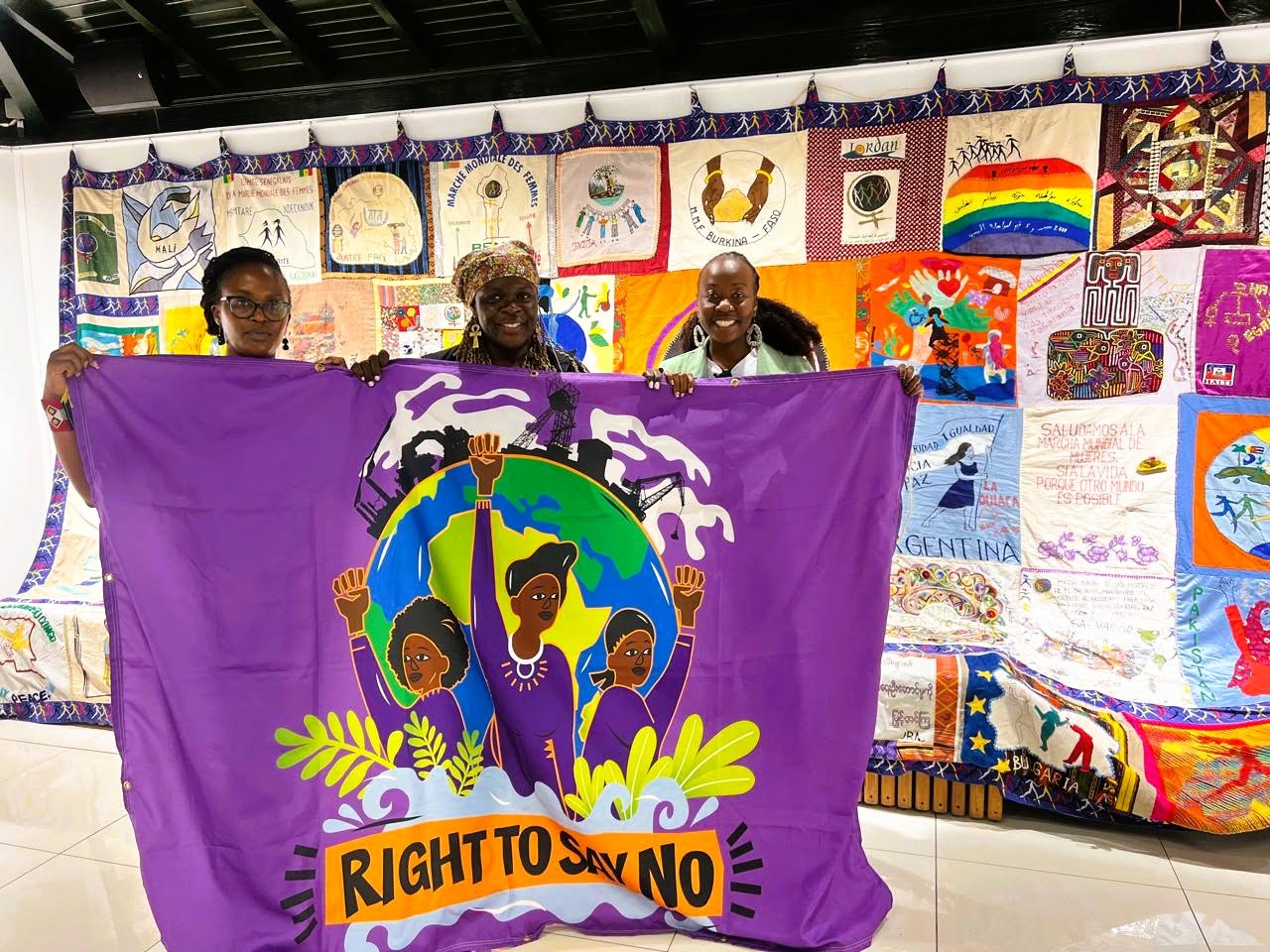
There can be no green transition that sacrifices the territories, livelihoods and rights of the people who protect our forests. Women on the frontlines are calling for a just transition that guarantees Free, Prior and Informed Consent (FPIC), upholds the Right to Say NO, protects community forests and ensures meaningful participation in decisions affecting their territories.
The question for COP31 is not simply how quickly the world can transition to cleaner energy, but whose lands, resources and livelihoods will pay the price?
The women of the Congo Basin remind world leaders that there can be no climate justice without protecting forests, respecting community rights and recognising women’s leadership.
From solidarity to collective action
Beyond sharing experiences, participants at the cross-border exchange developed a common action plan to strengthen women’s leadership and community resistance. Priorities included mapping iron ore activities and impacts, strengthening knowledge of legal protections, promoting the Right to Say NO and FPIC, improving risk and safety strategies, and building advocacy.
One immediate commitment was to launch a collective advocacy action demanding access to safe drinking water for communities affected by extractive activities. These commitments demonstrate that women are not simply victims of environmental destruction. They are organisers, knowledge holders, defenders of territories and leaders of alternatives that place life, collective care and ecological sustainability at the centre.
Defending the Congo Basin is defending life
The cross-border exchange reaffirmed that protecting the Congo Basin cannot be separated from protecting the rights of the women, Indigenous Peoples and communities who have safeguarded these territories for generations.
As world leaders deliberate over climate solutions at COP31, the voices of women from the Congo Basin must not remain on the margins of global climate discussions. United across borders, these women and communities show that collective power and solidarity can challenge extractivism and defend the forests, territories, and livelihoods of present and future generations. Defending the Congo Basin est defending life, dignity and the future of our planet.

