Reflecting on the Afrocentric International Feminist Organising School
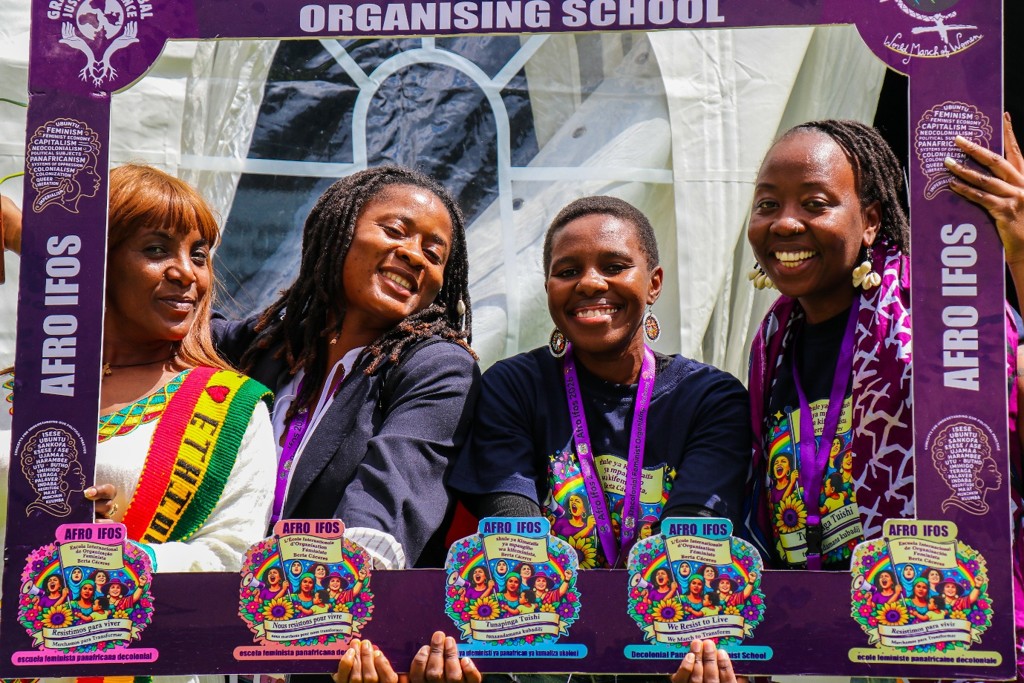
From 11 to 15 September 2026, the Berta Caceres International Feminist Organising School (IFOS) convened in Nairobi, Kenya. Co-organised by the Grassroots Global Justice Alliance, the Indigenous Environmental Network, and the World March of Women, it brought together over 150 participants from 37 countries and territories. Grounded in a decolonial and Pan African vision, the programme created space to explore interconnected struggles and alternatives. Discussions centred on climate justice, agroecology, land rights, sovereignty, and the Nature Commons.
Ubuntu revisited
One of the running themes of the school was the philosophy of Ubuntu. Rooted in Southern African ways of life, Ubuntu is a living tradition that shapes how we relate to one another and to the world around us, both physical and spiritual. Ubuntu invites us to recognise one another’s personhood and our interdependence as part of the broader web of Life.
“Ubuntu is often introduced through the phrase ‘umuntu ngumuntu ngabantu’, commonly translated as ‘a person is a person through other people’ or simply ‘I am because we are’. Ubuntu calls us to see personhood as fundamentally relational. With Xenophobia and Afrophobia on the continent in service of right-wing agenda, we must reclaim Ubuntu.”- Khwezilomso, South Africa
The school started from our individual journeys as feminists and the stories, struggles, and experiences that brought us to the movement. At the heart of these journeys was a deeper quest to reconnect with our own humanity, which in turn opened us to acknowledge and connect with the humanity of others. We came to see that, even before we could articulate it as such, the philosophy of Ubuntu was already present in our formation as feminists: the understanding that our humanity is deeply bound up with one another. From this recognition, we began to ask ourselves: What social projects, movements, ideas and philosophies can help us build ways of being that honour this interconnectedness?
Our questions have brought us into movements that challenge the imperialist ideologies and institutions that have disrupted and undermined Indigenous territories, cultures, and institutions. These include the anti-neoliberal movement, advanced by climate and ecological justice activists; the anti-imperialist movement, strengthened by decolonial thinkers and activists; and the anti-patriarchal movement, shaped by feminist struggles, etc. Across these movements, we find a shared commitment to transforming the systems that divide, exploit, and dehumanise us.
The tree of oppression
“White Supremacy needs excuses and pretexts to oppress people. [Systems of oppression] sustain their survival by eating our dignities.” – Isabel, Senegal
As anti-migrant sentiment spreads across the continent, we are reminded that systems of oppression fuel separation, war, militarisation, and suspicion among communities. State policies rooted in carceral, and punitive logic turn people into enforcers of one another’s humanity, encouraging violence in the name of “justice”. This same violence polices and criminalises gender-expansive identities, mobilises mobs to attack women for how they dress, and displaces entire communities in the name of so-called development. We must therefore be careful not to confuse the effects of oppression with its roots.
Systems of oppression stand on ideologies that are not always visible, but that over time are normalised and turned into cultural norms, institutions, and policies and then, finally, are made visible through violent actions. Land theft; feminicide; privatisation of natural resources; predatory trade agreements; breaches of human rights; imposition of invasive biotechnologies and corporate-driven destruction are a partial catalogue of the violence caused by capitalism, colonialism and patriarchy.
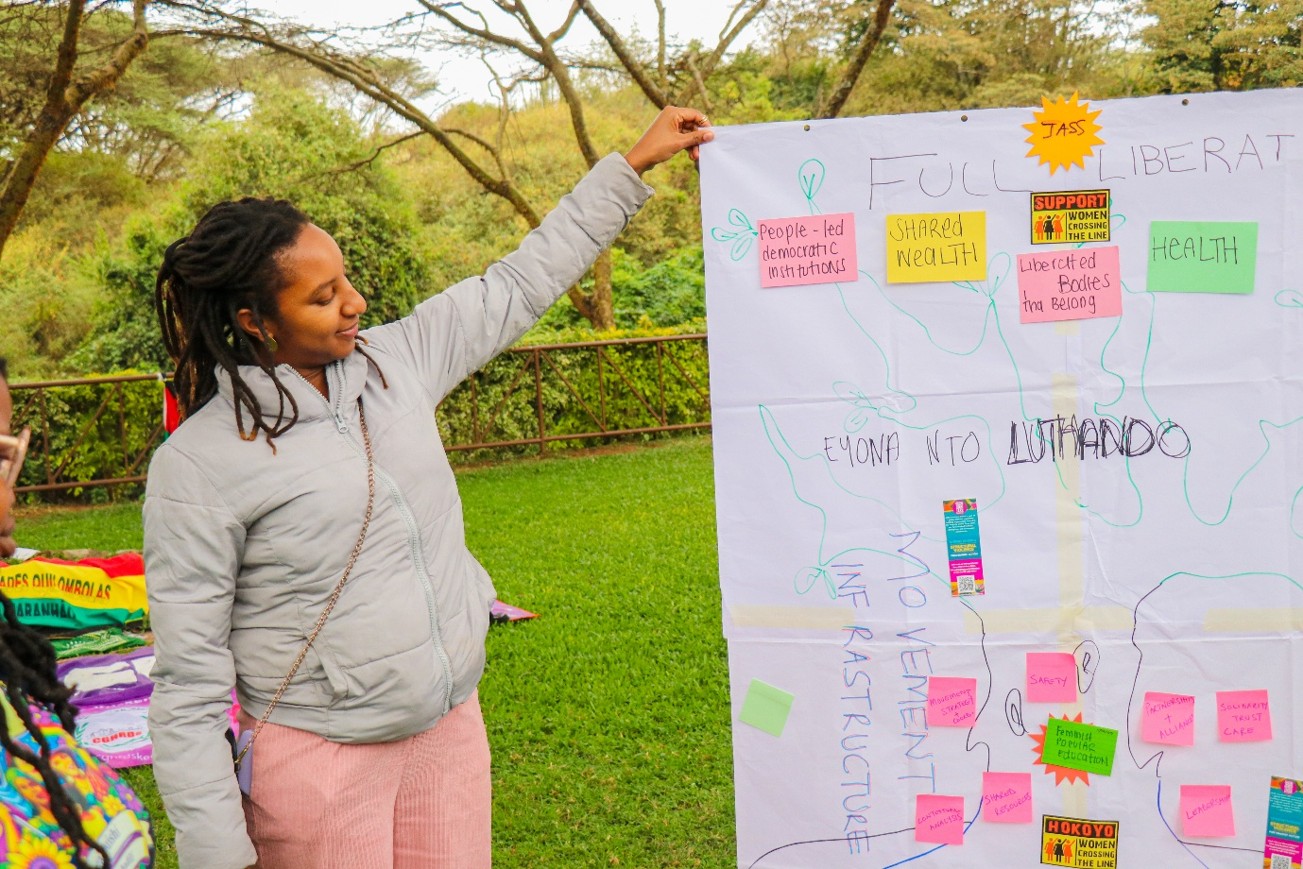
Not all is lost. The analysis drawn at the AFRO IFOS showed that, no matter how vast the dangers to our global communities, Indigenous peoples and their autonomy, it is no greater than the people’s power and commitment to sustain social, economic, political, cultural, and spiritual integrity. This was evidenced in the plethora of proposals and alternatives, as well as in the prayers, slogans, chants, music and dance that followed entire sessions.
Restoring our humanity
Through Ubuntu we understand that our sense of belonging as human beings is equally nurtured by our relationships with water, trees, animals, and spiritual beings that are part of our world. When we challenge patriarchal power and neocolonialism, we also reclaim our connection to one another and to Nature. As African ecofeminists, we recognise this reality and accept the invitation to restore our connections with all forms of life.
The AFRO IFOS was a learning experience that confirmed that liberation is on the horizon. In resisting systems that commodify land, food, and life, we commit to building alternative futures rooted in care, dignity, justice, and collective wellbeing. At the heart of this vision, we find solidarity, accountability, care, justice, and safety, values that shape not only how we imagine change, but how we practice it together.

